Web Design
7 min
Why most websites fail at hierarchy, not aesthetics
A beautiful homepage still underperforms if visitors can't instantly understand …
Read article

Most restaurant websites look decent but generate zero online reservations. Here's what actually matters — and what most agencies get wrong.
There are thousands of restaurant websites that look beautiful but generate zero reservations. The owner invested in a design agency, got a pretty homepage with a hero photo of the dining room — and then nothing. The phone doesn't ring more than before. Online bookings are nonexistent. The site sits there, costing hosting fees, doing nothing commercial.
After building restaurant platforms for clients in Nice, Chisinau and Paris, we've identified exactly what separates a restaurant site that drives revenue from one that doesn't. It has nothing to do with how beautiful the design is.
1. Make booking frictionless. The most important conversion action on a restaurant website is a reservation or an online order. Every additional step between "I want to eat there" and "reservation confirmed" loses potential clients. The booking button needs to be visible without scrolling on mobile — where over 70% of restaurant searches happen. The fewer fields in the reservation form, the higher the conversion rate. WhatsApp integration often outperforms traditional forms for local restaurants.
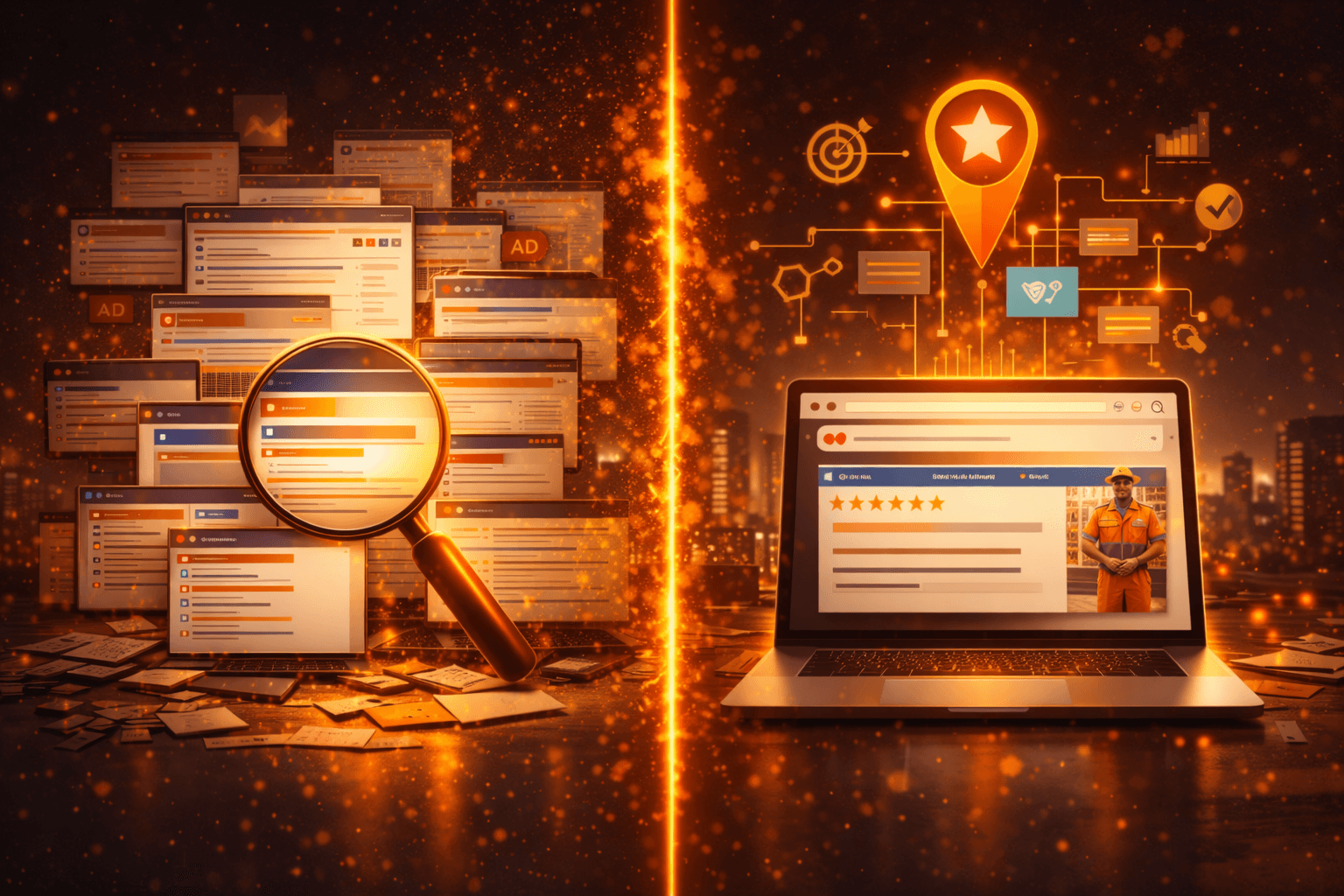
2. Appear when someone searches "restaurant [your city]." If you're not on the first page of Google for the relevant local query — "restaurant Nice", "restaurant roumain Paris", "restaurant caucasien Côte d'Azur" — you're invisible at the exact moment someone is deciding where to eat. This requires local SEO: a correctly configured Google Business Profile, a fast-loading website, proper use of schema markup, and location-specific page content.
3. Communicate the experience immediately. Restaurant decisions are made in seconds on visual impression. The hero section needs to show the actual atmosphere, the food, the feeling of being there — not a generic stock photo. Authentic photography of real dishes outperforms professional product shots in almost every test we've run.
For most restaurants, takeaway and delivery represent 20-40% of potential revenue that they're either losing entirely or routing through third-party platforms that charge 20-30% commission on every order. A direct online ordering system — even a simple one — typically recovers its development cost within a few months in commission savings alone.
The essentials for a working online ordering system: a clear menu with photos, flexible pickup time selection, automatic confirmation emails to both client and kitchen, and a stop-list system so you can deactivate sold-out items in real time. Everything else is a nice-to-have.
For restaurants in tourist areas — Nice, Paris, the French Riviera — a multilingual menu is not optional. Tourists who don't read French will leave for a competitor whose menu they can understand. At minimum, English and the language of your dominant tourist demographic (Russian for Côte d'Azur, for example) are worth the investment. The SEO impact is secondary to the direct conversion benefit of not losing English-speaking guests at the menu.
PDF menus. They don't load well on mobile, can't be indexed by Google and can't be linked to individual dishes. Always use web-native menu pages.
Stock photography. Guests can tell immediately. Authentic photos — even shot on a good phone — build more trust than generic stock images of food that doesn't exist in your restaurant.
Slow loading times. Restaurant decisions are made in seconds. A site that takes more than three seconds to load on mobile loses a significant portion of its visitors before they see anything.
A restaurant website that actually drives reservations doesn't require a massive investment. A well-structured WordPress site with online ordering integration, Google Business optimisation and a basic menu system can be delivered from €800–1,200. A custom-built platform with full online ordering, admin panel for menu management and multilingual support runs €2,500–4,000. The commission savings from removing third-party delivery platforms typically pay for the latter within 6–12 months.
Free 15-minute call. No commitment. Honest advice on what would move the needle for your business.
A beautiful homepage still underperforms if visitors can't instantly understand …
In today's digital-first world, having a website is no longer optional — it is t…
A website that looks good but doesn't generate leads is just an expensive brochu…
Free call, no commitment. We'll tell you exactly what would move the needle for your brand.